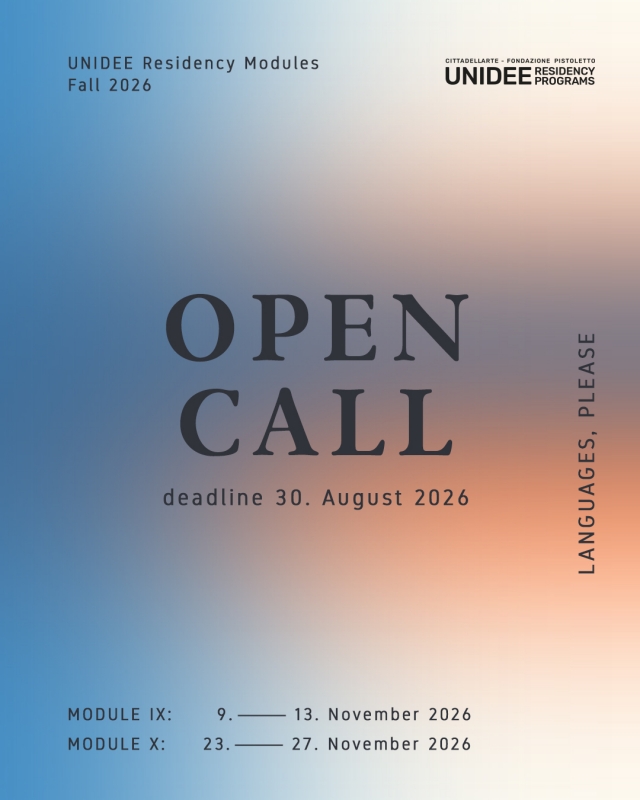
OPEN CALL – UNIDEE Residency Modules: LANGUAGES, PLEASE / Fall Season 2026
UNIDEE Residency Programs and Fondazione Pistoletto Cittadellarte are pleased to announce the open call for applications for the final modules of Languages, Please, which will conclude the research arc developed by UNIDEE Visiting Curators Nina Fiocco and Gaia Martino.
Languages, Please is an invitation to a collective series of rehearsals that explores languages as geopolitical spaces of dispute, narratives, and encounters. It is a call to engage with the porosity of our bodies in action and the narratives that can infuse and strengthen our practice of remaining polyphonic, amid the crumbling circumstances of the present.
To meet in a language embraces the paradox of feeling foreign but inside the language, consciously rejecting to be bound by borders and rules that the language itself may impose. The fragility and fleeting temporality of this process embody the very essence of the community as a political space: a plurality of possibilities forged by the acceptance of implicit differences and affective responses that sharing a language fosters in each of us. What is incomprehensible yet invisible—uncoded, unseen and unheard—is just as vital as what is comprehensible and visible. Moving beyond the individual existence as an isolated experience, our human and more-than-human bodies are constantly engaged in negotiating ecological relationships to defend our right to remain plural, precarious and complex. This is a call to delve into what it could mean to engage with sustainable acts of storytelling, reception, and the reclamation of spaces of coexistence—an ongoing, heterogeneous multiplicity of stories so far, in which collective imaginaries emerge from the reorganisation of the senses, rewriting and acting for justice, rather than from resonance or empathy. It is about breaking the habit of synthesis, shifting our attention from the stories that worlds tell us to the intricate micro-processes that compose these stories—memories, muscles, and multiple interwoven connections occurring at once.
The UNIDEE Modules programme is a short-term residency format for selected residents.
Participants will have the opportunity to cohabit at Cittadellarte and engage in an immersive, week-long residency, delving into their ongoing practice alongside peers, invited mentors, and guests. Discursive and material frameworks will intertwine, fostering a dynamic space where collective practice unfolds. Each module is interwoven within the 2025-2026 Modules program, threading together the fabric of Languages, Please.
To learn more about the project's context and objectives, please refer to the complete curatorial framework here.
Module IX – Beyond the Phrase will take place from 9 to 13 November 2026, and it is led by mentor Haytham el-Wardany
You and I are possibly dead, looking from far away, at the reflection of our smashed alphabet. The floor is cold, our hearts are wrenched, their voices are harmful. Yet you and I know that there's something else other than those voices - a delicate sound smuggled to us from the past, speaking to the future. Our language is crushed, like the bodies of the many surplus population today, and turned into a kind of purée that says nothing and tolerates everything. In moments of danger, in which anything can be tolerated, even a genocide, it is necessary to learn the language anew. How can we hear signals from the future in the ruins of our language? How do we relearn language and re-tune our ears to stand in solidarity? How can we sharpen our broken languages into weapons against fascist projects? And how might poetry help us to arrive at an im/possible tomorrow?
The title of this workshop is borrowed from Karl Marx’s The Eighteenth Brumaire of Louis Bonaparte, in which he locates the source of inspiration for social revolutions in the poetry of the future, not of the past. As Marx states: 'There the phrase went beyond the content; here [in the social revolution] the content goes beyond the phrase.'
A study group with texts, sounds & films by: Karl Marx, Fanon, June Jordan, Iman Mersal, Refaat Alareer, Derek Walcott, Michel Khelifi, Sarah Zeryab and Ruth Wilson Gilmore.
Module X – Returning to the Body: Sensory (Un)Knowing and the Politics of Perception will take place from 23 to 27 November 2026, and it is led by mentor Sara Mikolai with guest Jee-Ae Lim.
This module combines practice-based activities with theoretical frameworks to explore perception, embodiment, and sensory awareness. Centering the body as a primary medium of perception, it examines how sensory experience is shaped by historical, social, and political conditions, while investigating perception as a relational process between human and non-human living beings. Through practices of attention, listening, movement, and voice, participants develop artistic tools that expand their relationship to their surroundings and to their own creative processes.
The module also introduces South Asian philosophies of aesthetics, particularly the concept of rasa, as a way of exploring affect, intuition, and embodied knowledge beyond the Western canon. Through individual and collective reflection, participants engage with alternative ways of understanding artistic practice, language, and relational forms of knowledge, while examining the role of language across personal and political histories—from experiences of displacement and dislocation to the ways modern nation-building has transformed, suppressed, and erased languages.
We aim to invite a group of up to 12 residents to take part in each module. The programme is open to international participants of all backgrounds, whose engagement sits anywhere across the broad spectrum of cultural practice and research, with no restriction regarding disciplines, media or methodologies of work. Applications from artists, musicians, performers, curators, storytellers, writers, theorists, designers, activists, all are welcome and encouraged. We welcome applications from both individuals and collectives. If applying as a collective, please specify the number of participants and the nature of your collaborative practice.
The selection of participants will be guided by the resonance between the poetics, concerns, and inquiries present in the applicant’s work and those articulated by the curatorial framework of the UNIDEE Residency Modules 2025-26, and the core themes of each module. Additionally, consideration will be given to the applicant’s interest to contribute to a program-based residency rooted in processes of active exchange and participation.
The Residency Modules will take place at Fondazione Pistoletto Cittadellarte, in Biella, Italy.
The UNIDEE and Cittadellarte spaces will host a large part of the programme, while further opportunities for exploring the urban and rural landscape of Biella and its immediate surroundings will be offered.
Participants will be accommodated within the premises of Cittadellarte, in single rooms equipped with bedding and towels, and with the use of shared bathrooms. In case of participation in the workshop as a collective, they will be accommodated in a shared room. The residential spaces offer basic cooking facilities and communal resting areas. Arrival is expected in the afternoon on the day before the module begins, with departure scheduled for the afternoon of the day following the module’s conclusion. Should participants have specific flight requirements, we can assess the possibility of accommodating a longer stay. We are happy to welcome participants with children and/or small pets, ensuring a comfortable and inclusive environment for all.
We are committed to meeting to the best of our ability any accessibility requirements an attendee may have; this will be discussed individually with prospective residents.
N.B: English will be the common ground for interaction within the residency module, yet the work will not be confined to it. Languages will be approached as open territories, and participants will be invited also to engage with expanded, non-codified forms of communication, hybrid languages, and multiple configurations of interaction shaped by backgrounds, interests, and practices of all individuals within the group.
Further information regarding practicalities and FAQ available here.
To ensure sustainability to the UNIDEE Residency Module Programs, the participation fee follows a participatory method: each selected resident contributes with a fee based on their financial context, monthly income, and personal circumstances at the moment of the module. The fee is 280 euros per module, covering accommodation at Cittadellarte and administrative expenses. After the selection process, participants will be invited to share their proposed contribution.
A limited number of partial bursaries to cover travels are made available to those who would not otherwise be able to participate. Please make sure to indicate in your application if you wish to be considered for this opportunity.
Residents will be required to arrange and cover expenses for their travel to/from Biella and for the food/living costs whilst in Cittadellarte.
The team at UNIDEE remains at your disposal to support you in the visa application process and to offer guidance and recommendations with travel arrangements. Additionally, the team will provide you with any documents you may need should you decide to pursue other funding opportunities through your local art councils or via international platforms / funding bodies.
We accept applications through https://form.jotform.com/262073734397363 which includes detailed instructions for the application process. Applicants will receive a confirmation email once their submission has been successfully received.
Please note: Applicants must indicate their choice of one of the two modules and tailor their response accordingly. If they wish to apply for more than one module, separate applications, each appropriately written, are required.
Deadline for submissions is 30 August 2026, 23:59 (CEST)
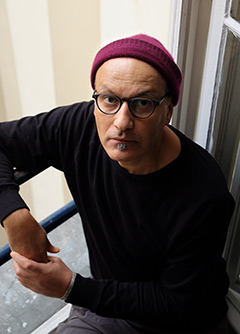
• Haytham el-Wardany is a writer and translator who found his way from Cairo to Berlin in the late 1990s, and since then has moved between the two cities. He writes mostly in Arabic and lives in Arabic, English, and German. He learned translation from this in-between traffic. Books being his favorite format, he has published seven about listening, sleeping, reading, and other active passivities. He has spent the last year listening to talking animals, learning from them how to speak in moments of danger.
More: https://nakoja-abad.work/
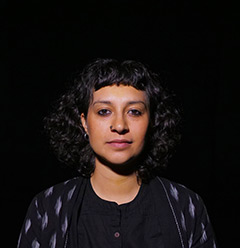
• Sara Mikolai is a choreographer, dancer, interdisciplinary artist and researcher of Tamil-German descent, based between Berlin and Sri Lanka. Her work opens sensory worlds through live performance, where dance, movement, and sound move as one. Grounded in a lifetime's engagement with Bharatanatyam, rooted within the Tamil refugee-migrant community in Berlin, her practice moves fluidly between the intimate and the political, the ancestral and the urgent. Over the past decade, she has established listening as both methodology and resistance in her practice, challenging the inherited canons of Western and postcolonial-nation-building South Asian dance contexts, re-imagining what dance can be and to whom it speaks. Her studies at HZT Berlin, the Iceland University of the Arts, and the University of Peradeniya, Sri Lanka, were supported by the German Academic Scholarship Foundation. Her work has been presented at the Venice Biennale, Wiener Festwochen, Shakti Colombo Dance Platform, Sophiensäle, the Australian Centre for Contemporary Art, the Gangwon Triennale, among others. She has taught and lectured widely, from the University of the Arts Berlin to RAW Material Company Dakar, NABA - New Academy of Fine Arts, to universities in Sri Lanka and more.
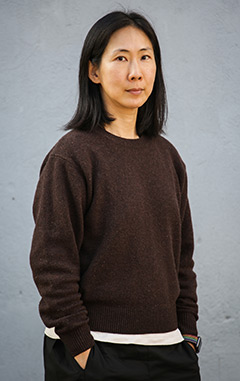
• Jee-Ae Lim is a choreographer and dancer based in Berlin and Seoul. She studied traditional Korean dance in Seoul and completed her MA in Solo/Dance/Authorship at HZT/UdK Berlin. Over the years, she has developed a distinct choreographic practice between the two languages of contemporary and traditional dance. Her artistic interest lies in observing the body as a moving archive – a carrier of cultural experiences and memories in the relationship between tradition and contemporaneity, individual memory and cultural remembrance, mobility and home. The impetus for her work is her own experience of diaspora, which she reflects corporeally in dance. She received the Pina Bausch Fellowship in 2024 and was named Promising Artist by tanzmagazine in Germany (2014) and Young Leading Artist by Gaeksuk magazine in Korea (2015). Her work has been shown at Sophiensaele, Volksbühne, and Berliner Festspiele (Berlin), Kampnagel (Hamburg), tanzhaus nrw (Düsseldorf), Dansehallerne (Copenhagen), Tokyo Metropolitan Theater (Tokyo), Korea National Contemporary Dance Company and Art Sonje Center (Seoul), among others.